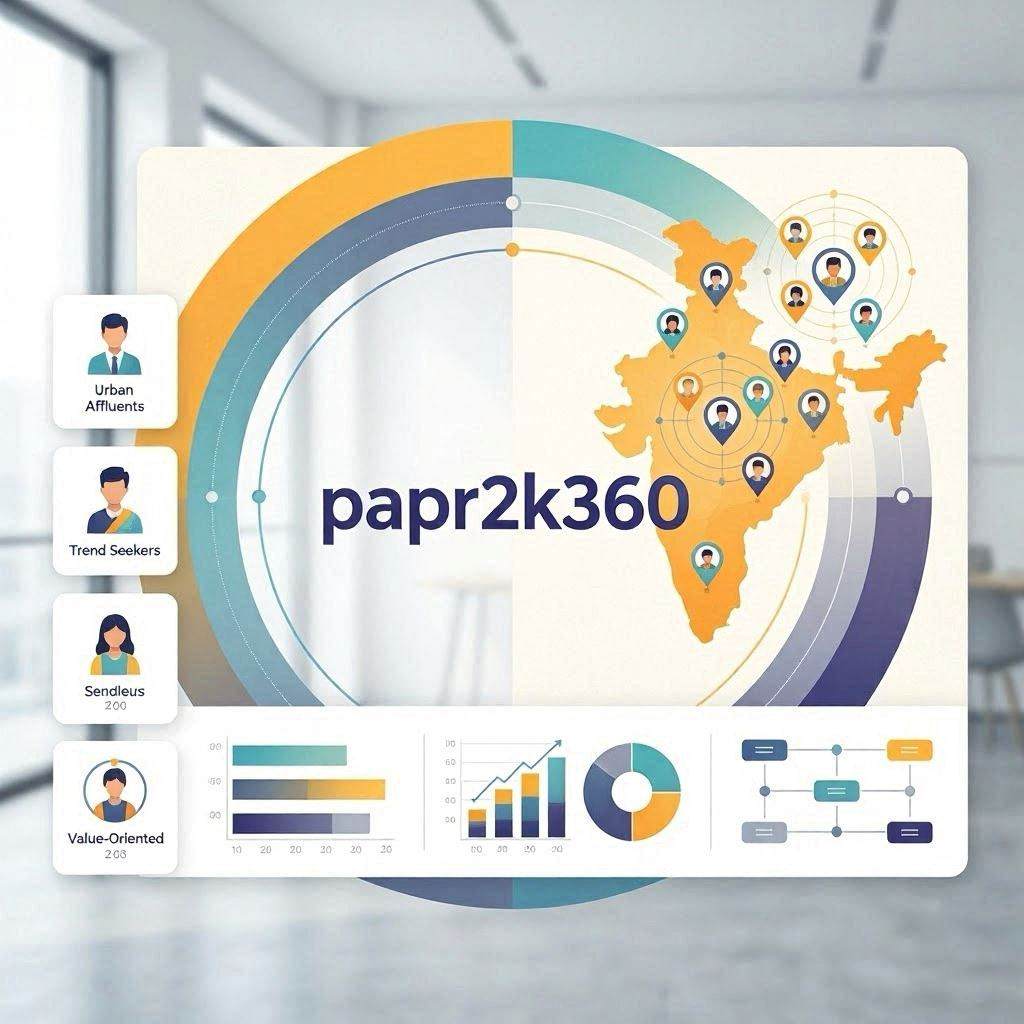
PAPR2K360: A World-Class Psychographic Segmentation and Customer Intelligence Framework for Indian Consumers
Abstract
The Indian consumer market is one of the most complex, diverse, and rapidly evolving marketplaces in the world. Traditional segmentation approaches based on demographics, geography, and transactional behavior increasingly fail to explain consumer decision-making in a society characterized by cultural plurality, digital transformation, economic mobility, and rising aspirations. This paper introduces PAPR2K360 (Psychographic, Aspirational, Predictive, Relational 2000+ Variables 360-Degree Customer Intelligence Framework), a next-generation customer profiling model specifically designed for Indian consumers. The framework integrates VALS, Schwartz Value Theory, Jobs-To-Be-Done (JTBD), behavioral economics, cultural psychology, AI readiness, financial psychology, and digital maturity indicators to generate a comprehensive customer intelligence architecture. The model aims to provide enterprises with a predictive understanding of consumer motivations, future purchase intent, loyalty potential, and lifetime value.
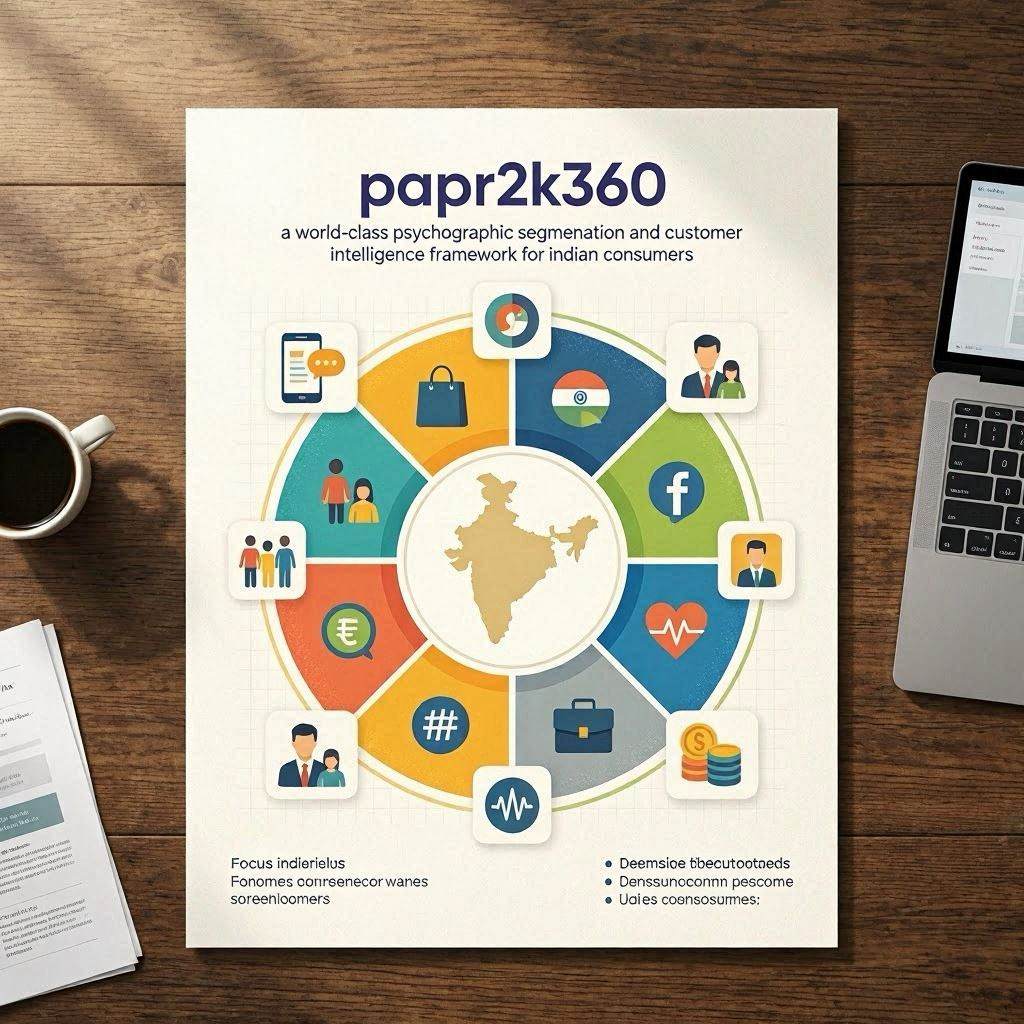
1. Introduction
India represents one of the world’s largest consumer ecosystems, encompassing multiple languages, religions, cultural identities, economic classes, and digital adoption levels. While demographic segmentation has historically served as the foundation of market research, contemporary consumer behavior increasingly reflects psychological, social, emotional, and aspirational influences. Two consumers with identical age, income, and location may exhibit entirely different purchasing behaviors due to differences in values, motivations, social identity, family influence, and digital confidence. Consequently, organizations require a more sophisticated customer intelligence framework capable of understanding not only who consumers are, but why they behave as they do.
2. The Need for a New Segmentation Paradigm
Traditional segmentation frameworks often focus on observable variables such as age, income, gender, and geography. While useful for market sizing, these variables provide limited predictive power regarding future behavior. The emergence of digital ecosystems, artificial intelligence, social commerce, and hyper-personalization necessitates a shift toward psychographic intelligence. PAPR2K360 addresses this gap by combining motivational, emotional, social, and cultural variables into a unified profiling architecture.
3. Conceptual Foundation of PAPR2K360
PAPR2K360 is founded upon four central pillars: Psychographic Intelligence, Aspirational Dynamics, Predictive Analytics, and Relational Influence Systems. Together, these dimensions create a 360-degree understanding of customer behavior. Unlike conventional frameworks, PAPR2K360 seeks to identify hidden drivers of behavior that influence decision-making across multiple categories and life stages.
4. Integration of VALS
The Values and Lifestyles (VALS) framework contributes the motivational architecture of PAPR2K360. Consumers are categorized according to primary motivations such as achievement, self-expression, ideals, and security. Within the Indian context, these motivations are further enriched by socio-cultural aspirations and family structures. The framework enables marketers to distinguish between achievement-oriented urban professionals, security-focused family planners, and self-expression-driven digital creators.
5. Integration of Schwartz Value Theory
Schwartz Value Theory provides the value-based foundation of the framework. Ten universal value dimensions—including achievement, power, security, conformity, tradition, benevolence, universalism, stimulation, hedonism, and self-direction—are measured to generate an individual’s value fingerprint. These value structures significantly influence brand preferences, product choices, and long-term behavioral patterns.
6. Integration of Jobs-To-Be-Done Theory
Jobs-To-Be-Done (JTBD) contributes the motivational layer that explains the purpose behind purchases. Every product or service is viewed as being “hired” to accomplish a functional, emotional, and social job. PAPR2K360 captures all three dimensions simultaneously, allowing organizations to understand not only what customers purchase but the underlying problem they seek to solve.
7. Core Identity Architecture
The framework identifies five primary identity orientations: Achievement Driven, Security Driven, Experience Driven, Purpose Driven, and Self-Expression Driven. These identities shape long-term behavioral tendencies and influence consumption patterns across industries. Core identity serves as the foundational layer upon which all other psychographic dimensions are built.
8. Aspirational Mobility Engine
India’s consumer economy is deeply influenced by aspiration. PAPR2K360 introduces an Aspirational Mobility Engine that measures upward mobility desires, prestige aspirations, career ambitions, lifestyle ambitions, and social advancement motivations. This engine enables prediction of premiumization trends and future consumption behavior.
9. Lifestyle Operating System
The Lifestyle Operating System classifies consumers based on how they allocate time, attention, and resources. Categories include Career-Centric, Family-Centric, Wellness-Centric, Technology-Centric, Luxury-Centric, Spiritual-Centric, and Experience-Centric lifestyles. Lifestyle patterns serve as leading indicators of future market demand.
10. Decision Psychology Framework
Consumer decisions emerge from a combination of rational, emotional, social, and impulsive influences. PAPR2K360 quantifies these influences through a Decision Psychology Framework. The resulting profile reveals whether a customer is data-driven, emotionally motivated, socially influenced, or highly impulsive.
11. AI Adoption Readiness Score (AARS)
Artificial intelligence is becoming an increasingly important determinant of consumer behavior. The AI Adoption Readiness Score measures awareness, trust, experimentation, automation acceptance, and AI usage maturity. This score helps organizations identify future-ready consumers likely to adopt AI-driven products and services.
12. Financial Confidence Score (FCS)
Financial psychology plays a critical role in consumption decisions. The Financial Confidence Score evaluates savings behavior, investment confidence, emergency preparedness, income stability, and future financial optimism. The score predicts spending patterns, borrowing behavior, and investment product adoption.
13. Regional Cultural Affinity Score (RCAS)
India’s regional diversity necessitates a dedicated cultural measurement system. The Regional Cultural Affinity Score measures attachment to local language, cuisine, festivals, media, traditions, and regional identity. High RCAS consumers often exhibit stronger preferences for localized brands and culturally relevant messaging.
14. Trust Formation Index (TFI)
Trust remains one of the strongest predictors of customer behavior in India. The Trust Formation Index identifies whether consumers place trust primarily in family, peers, experts, institutions, influencers, or brands. Understanding trust pathways enables organizations to optimize communication and customer acquisition strategies.
15. Language Preference Matrix (LPM)
The Language Preference Matrix captures the multilingual reality of Indian consumers. Different languages are often used for thinking, shopping, entertainment, business, and social interactions. The framework uses these preferences to personalize communication strategies and improve customer engagement.
16. Digital Payment Maturity Index (DPMI)
India’s digital payment revolution has fundamentally transformed consumer behavior. The Digital Payment Maturity Index measures UPI adoption, wallet usage, credit card dependence, subscription behavior, recurring payment usage, and digital transaction confidence. This dimension serves as an important indicator of digital sophistication.
17. Sustainability Orientation Score (SOS)
Sustainability awareness is becoming increasingly relevant among Indian consumers. The Sustainability Orientation Score measures environmental consciousness, ethical purchasing, recycling behavior, energy conservation attitudes, and support for sustainable brands. This score helps identify emerging eco-conscious consumer segments.
18. Brand Prestige Sensitivity Score (BPSS)
Prestige and social signaling play a significant role in Indian consumer behavior. The Brand Prestige Sensitivity Score evaluates the importance of status, visible branding, luxury aspirations, social recognition, and symbolic consumption. Organizations can use this score to identify premiumization opportunities.
19. Family Influence Score (FIS)
Unlike many Western markets, family influence remains central to Indian purchasing decisions. The Family Influence Score measures the impact of parents, spouses, children, extended family members, and community elders on consumer behavior. This dimension is particularly important in categories such as education, healthcare, real estate, and financial services.
20. Life Stage Transition Index (LSTI)
Consumer needs evolve through predictable life transitions. The Life Stage Transition Index identifies transitions such as education completion, first employment, marriage, parenthood, home ownership, career advancement, retirement planning, and eldercare responsibilities. These transitions often trigger major purchasing decisions.
21. Customer Intelligence Graph
PAPR2K360 combines all dimensions into a unified Customer Intelligence Graph. This graph maps relationships between values, motivations, aspirations, trust structures, financial confidence, digital maturity, and cultural influences. The graph enables real-time personalization and predictive analytics at scale.
22. Meta-Persona Generation
Using clustering algorithms and machine learning, PAPR2K360 generates dynamic meta-personas. Examples include Rising Achievers, Family Guardians, Digital Optimists, Cultural Modernists, Conscious Progressors, Prestige Maximizers, Financial Builders, and Convenience Seekers. These personas evolve continuously as customer behaviors change.
23. Predictive Capabilities
One of the most powerful aspects of PAPR2K360 is its predictive capability. By analyzing psychographic patterns, the framework can estimate product adoption probability, customer lifetime value, churn risk, advocacy potential, cross-sell opportunities, and future consumption behavior. This predictive intelligence provides substantial competitive advantages.
24. Enterprise Applications
The framework has broad applicability across banking, insurance, telecommunications, retail, healthcare, education, travel, automotive, real estate, and technology sectors. Organizations can leverage PAPR2K360 for customer acquisition, personalization, product innovation, pricing optimization, loyalty management, and omnichannel engagement strategies.
25. Conclusion
PAPR2K360 represents a next-generation evolution of customer intelligence tailored specifically for the Indian market. By integrating VALS, Schwartz Value Theory, Jobs-To-Be-Done, behavioral economics, cultural psychology, AI readiness, financial confidence, and family influence structures, the framework transcends traditional segmentation approaches. It enables organizations to move beyond demographic classification toward a deeper understanding of motivations, aspirations, values, and future behavioral trajectories. As India continues its digital and economic transformation, psychographic intelligence frameworks such as PAPR2K360 will become essential tools for enterprises seeking sustainable growth, superior customer experiences, and long-term competitive advantage.
